Falls, fractures and independence
Falls risks are not just a slippery floor.
FallsRisks.com
Falls risk is the label clinicians may put in your chart or above your bed. FallsRisks.com looks wider: at the risks that lead to a fall and what can follow, including fracture, head injury, bleeding, loss of independence or death.
As we age, the word falls may take on a different meaning. We have less reserve, slower balance recovery and sometimes more brittle bones. The aim is not to stop living, but to keep strength, confidence and resilience on our side.


Another meaning of falls
When does
“I fell over”
become
“I had a fall”?
There is no fixed birthday. “I fell over” often describes an accident; “I had a fall” starts to sound medical when reduced strength, balance, vision, bone strength or resilience make another fall more likely, the consequences greater, or recovery slower.
That stage can arrive through illness or injury at any age, but becomes more common as we grow older and lose physiological reserve. Like a waterfall, the drop may be obvious. In ageing, change can be quieter until one event makes it visible.
Why older people fall
Look for the stack, not one villain.
Most serious falls are a pile-up. A person may stand from a chair with weak thigh muscles, become light-headed from blood-pressure tablets, catch a slipper on a rug, fail to see a step in poor light, and land on bones made fragile by osteoporosis.
There are risks before the fall and risks from the fall itself. Muscle loss, poor balance, impaired eyesight, medicines, illness and slippery surfaces can make an accident more likely. What happens next depends on height, speed, the surface struck, how the person lands, whether the head is hit, bone strength and medicines such as blood thinners. A fall from a roof, ladder, cliff or high balcony carries a major risk of severe injury or death at any age; even a fall from standing height or out of bed can be devastating in an older person.
The practical work is not blame. It is detective work: what made this fall likely, what made injury worse, and what can realistically change before the next one?
Strength and balance
Leg weakness, slow reactions, Parkinson disease, stroke, neuropathy, arthritis, pain and deconditioning all matter. Progressive balance and strength work is one of the best-supported interventions.
Medicines and physiology
Sedatives, sleeping tablets, opioids, alcohol, low blood pressure, dehydration, infection, arrhythmias and low blood sugar can turn ordinary movement into a fall.
Eyes, feet and environment
Poor vision, bifocals on stairs, cataracts, painful feet, unsafe footwear, loose mats, pets, cords, wet bathrooms and poor lighting are modifiable risks.
Bone fragility
Healthy bones do not stop a fall, but they can change the consequence. Osteoporosis, osteopenia and previous minimal-trauma fracture should prompt fracture-risk assessment.
After any fall
Questions worth asking before everyone moves on.
What happened before impact?
Trip, slip, faint, dizziness, palpitations, rushing to the toilet, infection, dehydration, new medicine, alcohol, low glucose or simply no memory?
What injuries may be hidden?
Hip, pelvis, spine, wrist, ribs, head injury and skin tears can be missed when pain is masked by confusion, dementia or stoicism.
Who reviews the medicines?
Sleeping tablets, benzodiazepines, anticholinergics, antihypertensives, diuretics, opioids and multiple medicines deserve a careful risk-benefit review.
What changes this week?
A falls clinic months later is useful, but shoes, lighting, walking aid fit, blood pressure, hydration and urgent physiotherapy may need attention now.
Head injury and brain bleeding
A small fall can hide a serious bleed.
Older adults can sustain a traumatic brain injury after a ground-level fall, sometimes without being knocked out. Anticoagulants such as warfarin, apixaban and rivaroxaban, and antiplatelet medicines such as clopidogrel, can increase the danger of bleeding inside the skull.
BloodThinnersRisks.comGet urgent medical advice after a head hit
Do not rely on a normal-looking bump or an initially well person. NICE advises emergency-department assessment for head injury in people taking anticoagulants or most antiplatelet medicines, and clinicians may consider CT imaging even when no other scan indication is present.
Call emergency services now for deterioration
Worsening headache, repeated vomiting, increasing sleepiness, confusion, unusual behaviour, weakness, poor coordination, slurred speech, seizure, loss of consciousness or fluid or blood from the ears or nose are emergency signs.
Bring the medicine list
Know the medicine name, dose and time last taken. Do not stop a prescribed blood thinner on your own: the reason it was prescribed may also be life-saving. Urgent clinicians decide whether observation, CT scanning or reversal treatment is needed.
Osteoporosis and osteopenia
Bone density is not the whole story, but it matters.
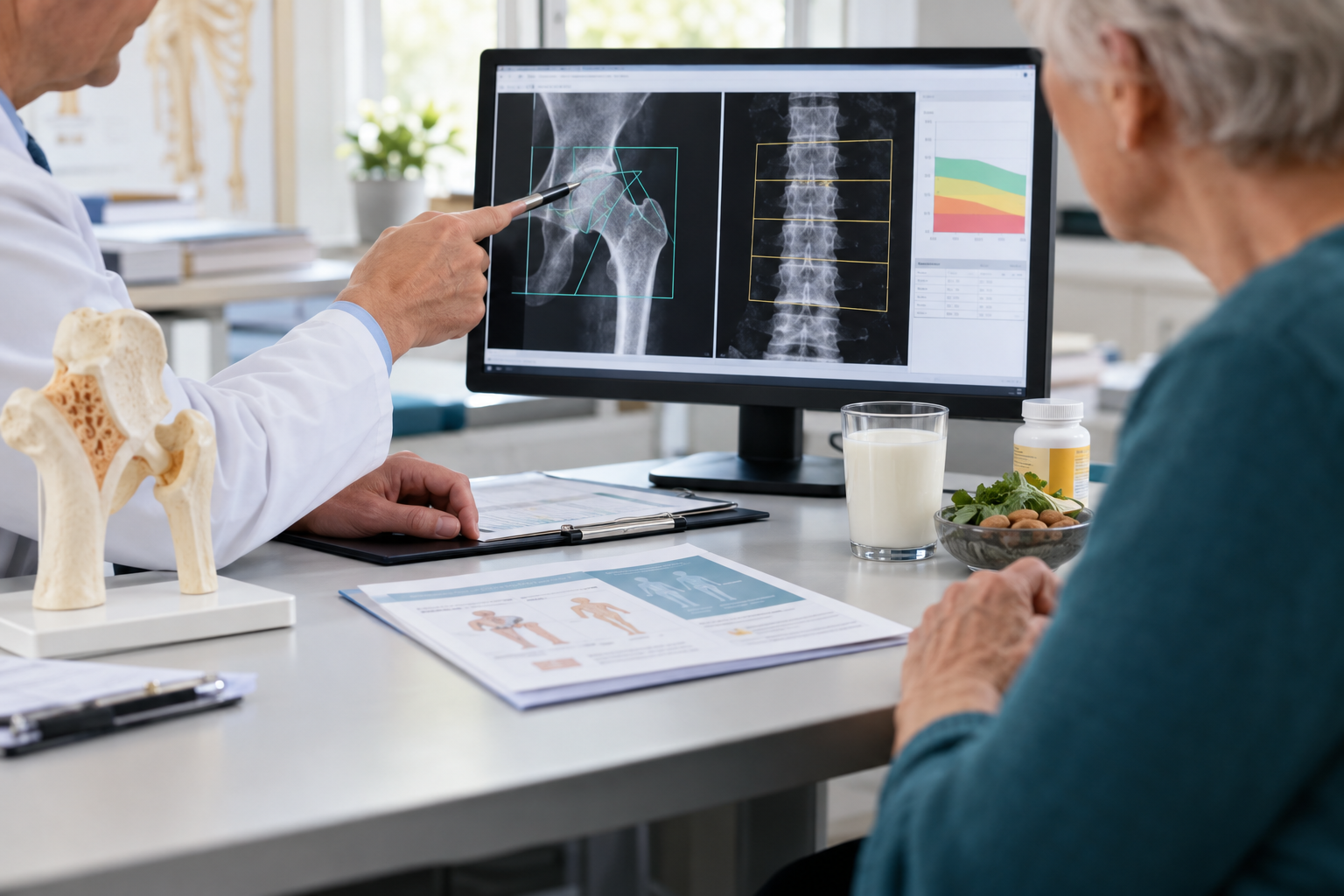
Osteoporosis is often silent until a fracture. Osteopenia means lower-than-normal bone density, not yet osteoporosis, but fracture risk also depends on age, previous fracture, falls, steroid use, family history, smoking, alcohol, body weight and other illnesses.
A minimal-trauma fracture after about age 50 should not be treated as bad luck alone. It is often the moment to assess fracture risk, vitamin D deficiency, calcium and protein intake, kidney function, secondary causes and whether proven osteoporosis medicines are indicated.
Calcium and vitamin D
Worth taking, or not?
The short answer: nutrients matter, deficiency matters, diet matters, but routine supplements alone are not a reliable shield against falls or fractures for most community-dwelling adults.
69 trials, 153,902 adults
A systematic review and meta-analysis found little to no clinically meaningful benefit from calcium, vitamin D, or combined supplementation for preventing fractures and falls in adults not receiving osteoporosis drug treatment. Most participants were community-dwelling and not high risk.
Read the PubMed abstractDo not confuse nutrition with treatment
Low intake should be corrected, severe vitamin D deficiency should be treated, and calcium-rich food is sensible. But osteoporosis medicines, strength and balance training, and falls-risk reduction do more of the fracture-prevention work for many high-risk people.
Supplements can have downsides
Calcium tablets can cause constipation and may be unsuitable for some kidney-stone or kidney-disease situations. High intermittent vitamin D dosing has not been a good falls-prevention strategy. Discuss dose, blood levels and kidney function with a clinician.
Residential care may differ
People in residential care, those with poor intake, little sun exposure, malabsorption, darker skin in low-sun settings, or true deficiency may be different from healthy community trial populations. Individual assessment still matters.
Hip fracture
A hip fracture is a medical turning point.
Hip fracture in an older person is not just an orthopedic injury. It can trigger delirium, pneumonia, clots, pressure injury, loss of independence and a move into residential care. Many patients do well, but the population risk is serious: roughly 30-day mortality is often reported in the single digits to low teens, and one-year mortality commonly around one fifth to one third, depending on age, frailty, dementia, comorbidity and health-system factors.
Surgery is usually performed because pain control, nursing care and mobilization are often worse without fixation or replacement. The operation can be urgent and high risk, but also palliative in the best sense: it may relieve pain and allow sitting, transfers and rehabilitation.
Anesthesia and outcomes
For hip fracture surgery, spinal anesthesia versus a general anesthetic is rarely the whole answer. It probably does not matter.
REGAIN trial
In 1,600 older adults with hip fracture, spinal anesthesia was not superior to general anesthesia for death or new inability to walk at 60 days. Delirium and discharge timing were also not substantially different.
NEJM trialRAGA trial
Regional anesthesia without sedation did not significantly reduce postoperative delirium compared with general anesthesia in older hip-fracture patients in the JAMA RAGA trial.
JAMA trialWhat may matter more
Timely surgery, fluids, pain relief, nerve blocks, pressure-area care, avoiding unnecessary sedatives, delirium prevention, treating infection, early mobilization and geriatric co-management can matter as much as the label on the anesthetic.
AAOS guideline PDFRecovery
Getting up safely is part of the treatment.
After hip fracture, early supported mobilization, nutrition, pain control, delirium prevention, bone protection and realistic discharge planning are not extras. They are the bridge back to a life outside the bed.
Related ANONAMED network
Useful places to keep asking better questions.
ANONAMEDOrganise questions and health decisions
TheHospitals.orgHospital care, systems and treatment pathways
AnesthesiaRisks.comAnesthesia risk and perioperative decisions
100Birthdays.comLongevity, ageing and practical prevention
BloodThinnersRisks.comBleeding risk, head injury and safer anticoagulant decisions
50Tests.comScreening, tests and over-testing questions
AdvanceCareDirective.comPreferences before a crisis
Trusted sources
Government, guideline and review links.
These links are starting points. Local services, eligibility and guidelines change, so check country-specific advice and speak with a clinician who knows the patient.
Falls and head injury
NIH National Institute on Aging: falls and fracturesCDC: preventing falls and hip fracturesNICE NG249 falls assessment and preventionNICE NG232: head injury and anticoagulantsCDC: brain injury in older adultsAustralia, New Zealand, Singapore
Healthdirect Australia: osteoporosisAustralian Commission: falls preventionHealth New Zealand: fall preventionSingapore HealthHub: preventing falls
About the author
Dr John Walker
Dr John Walker is a New Zealand anaesthetist, health-information author and founder of ANONAMED. He writes practical medical sites that help people ask better questions before decisions become urgent.
FallsRisks.com brings together geriatric falls prevention, bone health, hip-fracture care and anesthesia outcomes because these subjects meet in real life. A fall is often the moment when prevention, treatment, recovery and personal priorities all collide.